
Player of the Week:
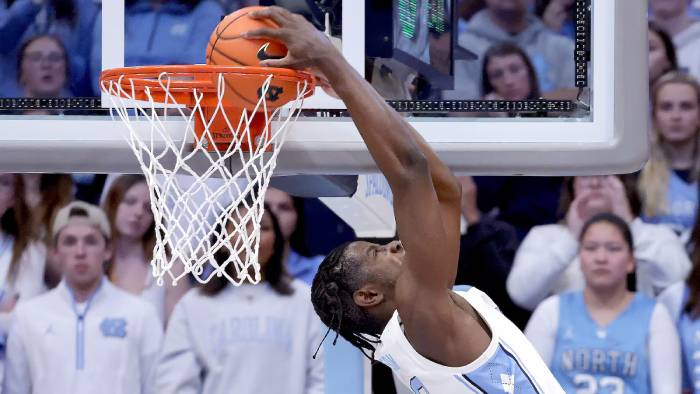
Caleb Wilson, North Carolina
Caleb Wilson has exceeded early expectations and is competing with a level of intensity rarely seen from a freshman. He has been a man on a mission from the opening tip, taking the country by storm with 24 points, 7 rebounds, and 4 steals in a statement win over Kansas, where he also outplayed Darryn Peterson. Averaging 20 points and 10 rebounds through five games, Wilson has anchored UNC’s unbeaten start with huge impact. He has been efficient and composed offensively, routinely finishing plays above the rim and converting a high volume of alley oop opportunities, with only one off night coming against Radford. His productivity and poise have already made him the anchor of the Tar Heels and one of the most effective players in the country.
Freshman of the Week:
Cameron Boozer, Duke
Cameron Boozer has stepped into college basketball looking remarkably prepared, quickly establishing himself as one of the nation’s top frontcourt freshmen. He is averaging 21.6 points, 10.4 rebounds, 4.4 assists, and 1.4 blocks while shooting 51.5 percent from the field, 34.8 percent from three, and 76.9 percent from the line in just under 30 minutes per game. Boozer has impressed with his passing, efficient scoring, and adept perimeter shooting, giving Duke a reliable and skilled presence inside. While he may not offer elite athletic upside, his maturity, physical strength, and consistent production have stood out early, making him one of the most dependable freshmen in the ACC and a clear candidate for Freshman of the Year
Who’s Hot?
Neoklis Avdalas, Virginia Tech
Neoklis Avdalas has quickly emerged as one of the ACC’s most productive early season surprises. Well known among Greek fans, he broke out nationally with 33 points, 6 assists, and 5 rebounds in an overtime win against Providence. He has also proven to be one of the conference’s best passers, averaging 6 assists per game. Even in a quieter scoring game against Charleston Southern, he kept his teammates involved with 9 assists. He entered the season as a name to monitor, but his early production has elevated him into one of the league’s most impactful young guards.
Louisville Cardinals
Louisville has looked as strong as any team in the country through its first four games. The Cardinals opened with a 59 point win over South Carolina State and followed it with a commanding victory over Kentucky, a rivalry game they controlled throughout. Future lottery pick Mikel Brown Jr. has been outstanding, and the backcourt duo of Brown Jr. and Ryan Conwell has quickly become one of the nation’s most difficult tandems to guard, combining for nearly 40 points per game. With that one two punch, increased depth, and a more physical, connected roster, Louisville looks capable of competing with anyone.
Boopie Miller, SMU
Boopie Miller has emerged as one of the best guards in the conference, taking a major step forward as both a scorer and facilitator. He is averaging 20.0 points per game through five contests and has posted an elite assist to turnover ratio early on, handing out 7.8 assists to just 2.6 turnovers. His 23 point, 12 assist showing against Butler highlighted his command of SMU’s offense and his ability to control games. At just 6 feet tall, his size may limit his long term draft intrigue, but he has been a clear college standout and a driving force behind SMU’s 5 0 start and early NCAA Tournament hopes.
Who’s Not?
Boston College
Expectations for Boston College were not particularly high entering the season, but a 3 2 start that includes losses to mid major opponents such as FAU and Central Connecticut State has been disappointing. Even the win over Temple came by just five points. Outside of Donald Hand Jr., bright spots have been scarce, and the team has struggled to generate consistent offense. Defensively, they have not shown the ability to get stops when needed. After finishing 4 16 in conference play last season, BC appears headed toward a similar trajectory unless Earl Grant can spark a turnaround soon.
Jarin Stevenson, North Carolina
Jarin Stevenson has had a slow and uneven start for North Carolina, with the talented Alabama transfer averaging 7.8 points and 5.0 rebounds on 40 percent shooting through five games. He is still not shooting with any consistency from deep, sitting at 28.6 percent from three, and he has yet to provide the steady scoring punch UNC hoped for. There have been some positives, including solid rebounding and flashes of defensive activity, but his overall efficiency and impact have not matched expectations. With his size and skill, Stevenson has the tools to turn things around, but he has not produced a true breakout performance yet.
Top Five ACC Teams
1. Duke Blue Devils (5 0)
Duke has looked like the league’s most complete and physically gifted roster through the early portion of the season. Powered by elite freshmen Cameron Boozer and Isaiah Evans, their length, versatility, and poise raise the team’s overall ceiling. Head coach Jon Scheyer has the group focused, prepared, and defending at a high level, giving the roster a strong foundation on both ends of the floor. The Blue Devils long term success will hinge on consistent point guard play, particularly when it comes to tempo control, decision making, and generating offense late in possessions. If the backcourt solidifies, Duke has genuine championship level upside.
2. Louisville Cardinals (4 0)
Louisville ranks second thanks to a strong early season showing and a roster that looks far more cohesive and physical than in recent years. Freshman guard Mikel Brown has been sensational so far, joining a talented and well coached team that has shown real improvement on both ends of the floor. The Cardinals’ early statement came in the form of a huge win over arch rival Kentucky, a game they controlled throughout. If their perimeter shooting continues trending upward, Louisville has the talent and toughness to compete with Duke and UNC and make a long run in the tournament.
3. North Carolina Tar Heels (5 0)
North Carolina holds one of the top early season wins in the country after beating Kansas and features one of the strongest frontcourts in college basketball. Freshman Caleb Wilson has been better than advertised, playing with unmatched intensity, while Henri Veesaar has added needed mobility, shooting, and rim protection. Head coach Hubert Davis has this group defending hard, sharing the ball, and playing with purpose on both ends. Seth Trimble brings elite athleticism and defense, but his shooting remains a major hurdle for a backcourt searching for more consistency. For UNC to reach true national title contention, the guards must provide steady ball handling, defensive pressure, and complimentary scoring. If those areas improve, the Tar Heels have a very real path to March Madness glory.
4. NC State Wolfpack (4 0)
NC State’s undefeated start has come behind a fast, aggressive roster built to pressure opponents. Texas Tech transfer Darrion Williams has become the team’s leading scorer and emotional anchor, while sophomore Paul McNeil has taken a major step forward as a perimeter creator. With the duo elevating the team’s potential, NC State enters ACC play with far more stability and scoring depth. Cleaning up half court execution and rebounding will determine whether they can evolve into a true contender, but the foundation for a Sweet 16 run is already present.
5. Virginia Cavaliers (4 0)
Virginia rounds out the Top 5 with a classic Tony Bennett start built on disciplined defense, smart rotations, and efficient offense. The Cavaliers may lack the star power of Duke and UNC, but their structure, pace control, and attention to detail give them a consistently high floor. German freshman Johann Grunloh, a 7 foot forward, has had a slow start statistically but brings intriguing size and mobility and has the talent to emerge as a difference maker as the season progresses. If Virginia continues to develop scoring options to complement its defensive identity, this team has the potential to be a tough matchup for anyone in March.