
The Eastern Conference featured a wide range of draft strategies, from teams adding franchise cornerstones at the top of the lottery to contenders looking to strengthen their depth. Several organizations came away with excellent value throughout the draft, while others focused on long-term upside. Here’s a look at how each team’s class stacks up.
Atlanta Hawks – A
Added:
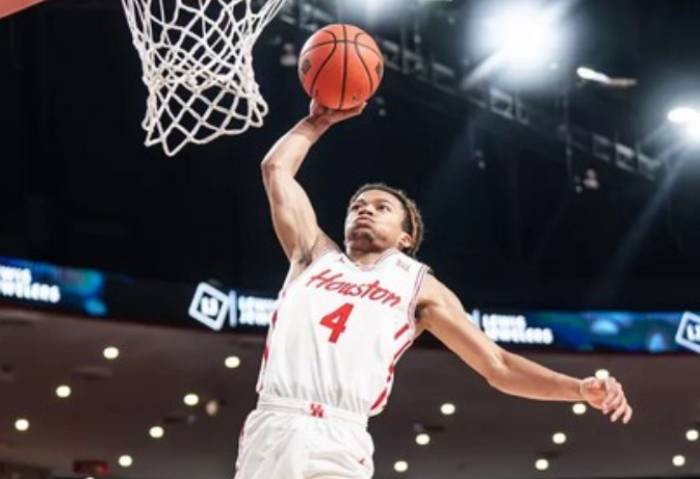
#8 Kingston Flemings, PG, Houston
#23 Zuby Ejiofor, PF/C, St. John’s
#52 Henri Veesaar, C, North Carolina
With the 8th pick acquired from the Pelicans as part of last year’s Derik Queen trade, the Hawks parlayed it into speedy guard Kingston Flemings, who boosts the athletic profile of an increasingly deep backcourt. Flemings was one of the highest-upside players in the entire draft, making him an excellent value at No. 8. If everything comes together, he has the talent to develop into the type of franchise-level player every team hopes to find in the lottery. His toughness and ability to pressure the rim off the bounce will be welcomed in Atlanta. The next steps for him are getting stronger and continuing to polish his jump shot mechanics.
Zuby Ejiofor, taken 23rd overall, is a physical frontcourt player with plenty of experience after four productive college seasons, including an outstanding career at St. John’s. He fits the bill of an enforcer, bringing a sturdy 6-foot-7, 245-pound frame, a 7-foot-2 wingspan and the motor to be a menace on the offensive glass. There is an opportunity for Ejiofor to earn immediate minutes in a frontcourt that needs additional depth and toughness.
Henri Veesaar, a 6-foot-10 center out of North Carolina, was projected by many to be a late first-round selection, making his selection at No. 52 excellent value. He enjoyed a productive junior season and has intriguing floor-spacing ability for a player his size.
Boston Celtics – B-
Added:
#27 Chris Cenac Jr., C, Houston
#40 Dillon Mitchell, PF, St. John’s
The Celtics used the draft to bolster their frontcourt depth, selecting physically gifted big man Chris Cenac Jr. with their late first-round pick and the springy Dillon Mitchell in the middle of the second round. Following the surprising offseason trade that sent Jaylen Brown to the Sixers for Paul George and two future first-round picks, Boston appears further away from championship contention than it was just a few months ago. The move suggests a greater emphasis on building for the future, making this draft class fit the organization’s new direction.
Cenac was among the most highly touted recruits in the 2025 high school class, and at 6-foot-10, 240 pounds has the frame to develop into an NBA center. His offensive polish, both facing the basket and posting up, is still in the early stages of development, but coming from Houston he understands toughness and is a solid rebounder. He is clearly a long-term investment, but he lands in an excellent developmental situation and offers tremendous upside while representing strong value at No. 27.
Mitchell is a wiry forward who won’t score much or make many jumpers, but he is a livewire who flourishes in transition, attacks the glass relentlessly and is a switchable defender. With Boston looking toward the future, both players should have opportunities to develop into meaningful contributors over the coming seasons.
Brooklyn Nets – B+
Added:
#6 Mikel Brown Jr., PG, Louisville
#28 Joshua Jefferson, PF, Iowa State
#43 Tyler Bilodeau, PF, UCLA
Mikel Brown Jr., the talented Louisville guard who was selected sixth overall, was one of the most interesting selections in the draft. He can light up the scoreboard from the perimeter and flashes impressive passing ability, but he also dealt with a nagging back issue this past season and, because of his draft position, will inevitably be compared to Darius Acuff Jr., whom many viewed as the top point guard prospect in the class. Brown is certainly a risky selection because of his injury history, but the upside easily justifies the gamble. In fact, we preferred Brown to Keaton Wagler, who went one spot earlier to the Clippers. Brown has special offensive talent, combining natural shot-making ability with advanced playmaking instincts that give him legitimate star upside if he stays healthy.
Later in the draft, the Nets added Joshua Jefferson, a unique 6-foot-8, 245-pound point forward whose passing ability produced multiple triple-doubles at Iowa State. His game is reminiscent in some ways of Kyle Anderson, utilizing his size, feel and passing ability rather than overwhelming athleticism. How his defense translates will likely determine how much he sees the floor, but he has the instincts and toughness to make it work and was generally an asset on that end in college. It’s clear from Brooklyn’s last two draft classes that the organization places a premium on players with high-level passing ability.
They also selected Tyler Bilodeau at No. 43. Bilodeau is a skilled stretch forward with an excellent shooting stroke and strong offensive instincts. While questions remain about his athleticism and defensive versatility, his floor spacing and feel for the game make him an intriguing developmental piece.
Charlotte Hornets – B
Added:
#14 Hannes Steinbach, C, Washington
#18 Christian Anderson, PG, Texas Tech
After a pair of blockbuster offseason trades that sent former franchise cornerstones LaMelo Ball and Miles Bridges elsewhere, the Hornets continue building around emerging young stars Brandon Miller and Kon Knueppel. Charlotte has quietly begun stockpiling future draft assets in a manner reminiscent of Oklahoma City’s patient rebuild, signaling a clear long-term vision while reshaping the roster around its new core. Trading Ball was as much a culture move as a basketball decision, but it also speaks to how highly the organization thinks of Christian Anderson and his ability to eventually take the reins at point guard.
They added size by selecting 6-foot-10, 250-pound German import Hannes Steinbach out of Washington with the final lottery pick. He is arguably the best rebounder in this class after grabbing nearly 12 boards per game this past season. Steinbach gives the Hornets another high-character, physical frontcourt piece to pair with their young foundation.
Four picks later they selected talented flamethrower Christian Anderson out of Texas Tech. Anderson has deep range and is a rock-solid pick-and-roll guard who consistently makes sound decisions on when to score and when to get teammates involved. There are questions about his overall athleticism and defensive ability, but the skill level is undeniably high. As Charlotte continues accumulating young talent and future draft capital, Anderson gives the organization another skilled building block who fits its long-term timeline.
Chicago Bulls – A-
Added:
#4 Caleb Wilson, PF, North Carolina
#15 Dailyn Swain, SF, Texas
By adding Caleb Wilson fourth overall, the Bulls probably made the easiest pick of the night. Wilson is an exciting and explosive 6-foot-10 frontcourt player who will be tons of fun to watch over the next several seasons and is a perfect cornerstone for a Bulls team that went through major organizational changes this offseason and was looking to reenergize its fanbase. Wilson has as much upside as anyone in this draft, making him an outstanding selection at No. 4.
Wilson and rising third-year forward Matas Buzelis have the potential to become an open-court nightmare for opponents. Considering how tantalizingly gifted Wilson already is offensively, if he ever becomes a consistent threat from the three-point line, his upside will rival anyone in this class.
The Bulls also grabbed their guy by selecting Dailyn Swain just outside the lottery after he carried late first-round grades. The 6-foot-7, 220-pound wing quietly put together an outstanding season at Texas, operating as both a big lead guard and wing while consistently overpowering smaller defenders on his way to the basket. We viewed Swain as a slight reach at No. 15, as he still lacks polish as a creator and his outside jumper needs work. However, his physical tools and overall upside are undeniable, making him an intriguing long-term investment.
While Chicago’s shooting didn’t improve with these selections, the organization’s vision is clear as it continues building an exciting, athletic team capable of becoming a real force in transition.
Cleveland Cavaliers – B
Added:
#34 Meleek Thomas, SG, Arkansas
Meleek Thomas has found ways to light up the scoreboard at every level he has played, and his selection by Cleveland gives him an opportunity to continue doing just that after an impressive freshman season at Arkansas.
Many believed the thin 6-foot-3 shooting guard would come off the board in the latter part of the first round, making his selection at No. 34 excellent value. The Cavaliers could certainly use his microwave scoring ability and three-point shooting, giving him a realistic opportunity to carve out a bench role.
Thomas also ended up being one of the financial winners of the draft. Despite sliding to No. 34, he signed a four-year, $9.26 million rookie contract under the NBA’s second-round pick exception, including roughly $6.35 million guaranteed over the first three seasons with a team option in Year 4. Ironically, Thomas received more guaranteed money than 30th overall pick Koa Peat, making his draft-night slide much easier to stomach.
Detroit Pistons – B
Added:
#17 Ebuka Okorie, PG, Stanford
#53 Ugonna Onyenso, C, Virginia
The Pistons saw how heavily they relied on Cade Cunningham this season and quickly realized they needed another player capable of taking pressure off him, acquiring Ebuka Okorie on draft night. Okorie is one of the fastest guards in the class and an outstanding athlete who posted encouraging shooting numbers during his lone season at Stanford. There is plenty of intrigue with his upside, but we slightly preferred Christian Anderson, who came off the board one pick later at No. 18. Okorie is an intelligent, highly motivated player who should carve out an NBA career, though No. 17 may have been a slight reach based on the overall talent available. He will need to get stronger and continue extending his shooting range to the NBA three-point line, but he offers an exciting contrast in style alongside Cunningham.
Late in the second round, Detroit added Ugonna Onyenso, one of the premier rim protectors in the class. The 7-footer remains extremely raw offensively, but his length, shot-blocking ability and defensive presence give him a chance to develop into a valuable backup center.
Indiana Pacers – C-
Added:
#38 Braden Smith, PG, Purdue
The Pacers entered the draft with only the 38th selection after their first-round pick was sent to the Clippers in the curious midseason trade for Ivica Zubac. Giving away a first-round pick with so little protection during what turned into a tanking season never made much sense, and Indiana ultimately paid the price, with the Clippers turning that selection into Keaton Wagler at No. 5.
With their lone selection, the Pacers drafted local Purdue product Braden Smith. Smith, a four-year starter in college, is a pesky 5-foot-10 point guard who ran the show for multiple outstanding Boilermaker teams and finished his career as the most prolific passer in NCAA history. Considering his physical limitations, it is difficult to envision him carving out a consistent NBA role, but it would be fun to see him become a fan-favorite third point guard. One thing is certain: he will battle until the very end for a roster spot.
Miami Heat – B
Added:
#37 Ryan Conwell, SG, Louisville
The Heat originally owned the 13th pick, but dealt it on the eve of the draft as part of the blockbuster trade for Giannis Antetokounmpo. That selection ultimately became Nate Ament. While losing a lottery pick is never easy, acquiring a player of Giannis’ caliber is well worth the price and immediately changes the trajectory of the franchise.
With obvious concerns about adding shooting after gutting their roster in the Giannis trade, the Heat acquired Ryan Conwell with the 37th pick. Conwell is a sturdy 6-foot-4, 215-pound guard who moves well without the ball and constantly let it fly from beyond the arc during his senior season at Louisville, averaging nearly 10 three-point attempts per game. Over the course of his college career he averaged nearly seven three-point attempts while shooting roughly 38 percent, giving him legitimate NBA range and confidence. Landing in Miami is about as good a situation as Conwell could have hoped for considering both his projected role and opportunity for early playing time.
Milwaukee Bucks – B+
Added:
#10 Brayden Burries, SG, Arizona
#13 Nate Ament, PF, Tennessee
#60 Malique Lewis, SF, South East Melbourne
The rebuilding Bucks picked up a pair of talented prospects in the back half of the lottery with Brayden Burries and Nate Ament. Burries may ultimately prove to be the prize of the class. The combo guard comfortably plays on or off the ball as an unselfish operator with a solidly built 6-foot-4, 215-pound frame. He was arguably the best player on a very experienced and successful Arizona team, and his offensive game appears to be just scratching the surface despite an outstanding freshman campaign. Considering both his talent and upside, Burries has an excellent chance to become one of the steals of the lottery.
Ament is a bit of an enigma whose inconsistent freshman season started and ended with much to be desired, but he also showcased his tremendous upside during a strong stretch of SEC play. Some envision him eventually becoming a supersized perimeter player because of his fluid athleticism and soft touch, though both his handle and jump shot still need considerable development. More than anything, he needs to become a much more assertive player on both ends of the floor. Becoming stronger and embracing a more physical role in the frontcourt would also help him maximize his potential. At No. 13, he represents a worthwhile upside swing for a rebuilding team.
Milwaukee also added Malique Lewis with the final pick of the draft. Lewis is a long, athletic wing who has steadily improved his perimeter shooting while playing professionally in Australia’s NBL. He remains somewhat raw offensively, but his physical tools and defensive versatility make him an intriguing long-term developmental prospect.
New York Knicks – A-
Added:
#39 Jack Kayil, PG, Alba Berlin
#47 Tyler Nickel, SF, Vanderbilt
The defending champions were less focused on adding immediate contributors and more concerned with managing the salary cap to keep their championship-caliber bench intact. New York moved off the 24th pick, which ultimately became Cameron Carr, sacrificing the opportunity to add another premium young talent in order to preserve the depth that played such a key role in its title run. With the Knicks firmly in win-now mode and their championship window potentially shorter than most contenders, it’s difficult to criticize the approach.
Jack Kayil is a German point guard who seems likely to remain overseas for additional development, while Tyler Nickel is a 6-foot-8 forward with a smooth shooting stroke and limited athleticism. Nickel has an excellent feel for spacing the floor, playing within himself and making simple winning plays. While neither player projects as an immediate contributor, both fit the Knicks’ long-term developmental philosophy.
Orlando Magic – C-
Added:
#51 Izaiyah Nelson, PF/C, South Florida
With only one selection, the Magic added athletic big man Izaiyah Nelson out of South Florida. At roughly 6-foot-10, Nelson plays much bigger than his height thanks to his explosiveness, length and relentless motor. He was a matchup problem for AAC frontcourts throughout his senior season, finishing plays around the basket while providing energy on both ends.
His offensive skill set remains limited, but his defense, rebounding and willingness to do the dirty work give him a legitimate opportunity to compete for an NBA roster spot.
Philadelphia 76ers – B+
Added:
#22 Labaron Philon Jr., PG, Alabama
The 76ers have to be thrilled that talented Alabama guard Labaron Philon fell into their lap at No. 22, a pick they acquired in the Jared McCain trade that baffled many around the league. There are few perimeter players in this class with the natural ability to create their own shot and score in bunches from all three levels the way Philon can. Whatever concerns caused Philon to slide, the 76ers may have landed one of the biggest steals in the draft.
He projects nicely into an instant-offense role behind the ultra-talented backcourt duo of Tyrese Maxey and VJ Edgecombe. His versatility to play either guard spot only adds to his value. Considering both his upside and relatively high floor, Philon could end up being one of the better value selections in the entire draft. Adding strength to his frame should help address the defensive concerns that currently project as his biggest weakness.
Philadelphia was just getting warmed up. The franchise later landed one of the league’s premier talents in Jaylen Brown, acquiring him from Boston in exchange for Paul George and two future first-round picks. Brown had been the subject of trade speculation amid reports that he had grown frustrated with playing in Jayson Tatum’s shadow, while his massive contract was set to make him one of the highest-paid players in the league and increasingly complicated Boston’s long-term salary structure. The combination of the reported friction and Brown’s enormous contract appeared to soften his market, creating an opportunity Philadelphia was quick to capitalize on. The 76ers added an established All-NBA caliber wing to complement their young backcourt and dramatically accelerated their return to Eastern Conference contention.
Toronto Raptors – A-
Added:
#19 Allen Graves, PF, Santa Clara
#50 Jaden Bradley, PG, Arizona
The Raptors made an interesting selection when they picked freshman Allen Graves out of Santa Clara with the 19th overall pick. The 6-foot-9, 225-pound forward is a smart player with an outstanding feel for the game and consistently takes what the defense gives him. He can knock down open jumpers, find cutters, serve as a secondary playmaker and rebound his position. His instincts also show up defensively, where he averaged nearly two steals per game.
Graves is not the fastest or most explosive athlete, will likely be targeted on switches defensively and is not a natural high-volume scorer. Still, his unique style fits well on a Raptors roster that has often valued versatile, high-IQ players. Toronto could have addressed point guard or center, but clearly believed Graves was the best player available.
With the 50th pick, Toronto added Jaden Bradley to compete for a backup point guard role. Bradley is a tough, experienced defender who developed into one of Arizona’s most reliable players during his four-year college career. His defensive intensity and maturity should give him an opportunity to compete for minutes.
The Raptors weren’t finished reshaping their roster. They later reunited with franchise icon Kawhi Leonard, bringing back the former Finals MVP after another tremendous season. Leonard immediately gives Toronto a proven championship centerpiece once again, and the organization will look to recapture the magic of its 2019 title run with a roster built around one of the franchise’s all-time greats.
Washington Wizards – A
Added:
#1 AJ Dybantsa, SF, BYU
#46 Felix Okpara, C, Tennessee
The Wizards used the first overall pick on AJ Dybantsa, giving the franchise the elite wing prospect it had been searching for. Some evaluators viewed Utah’s Darryn Peterson as the best overall talent, and those two will be linked throughout their careers as fans debate who should have gone first.
Peterson’s injury concerns clearly influenced Washington’s decision, particularly considering how injuries prematurely derailed the franchise cornerstones of both John Wall and Bradley Beal. Regardless, the Wizards came away with a potential franchise player. Dybantsa put together one of the most prolific freshman scoring seasons in recent memory, leading the nation in scoring while producing 14 consecutive 20-point games. His personality should quickly make him a fan favorite, and he projects as an immediate impact player alongside veteran point guard Trae Young. He should enter the season as one of the leading candidates for Rookie of the Year while possessing perennial All-Star upside. Washington appears to have finally found the franchise centerpiece it has been searching for, giving the organization legitimate hope that it can build a consistent winner around him.
With their second selection, the Wizards added Felix Okpara out of Tennessee. The rugged 6-foot-11 center is one of the better defensive big men in the class, bringing rim protection, rebounding and physical interior play. His offensive game remains limited, but he projects as a valuable defensive-minded role player capable of providing frontcourt depth alongside Washington’s young core.


