
The Western Conference featured a fascinating mix of approaches during the 2026 NBA Draft. Several contenders prioritized immediate contributors while rebuilding clubs continued stockpiling long-term talent. Some teams found franchise cornerstones, others landed tremendous value late, and a handful took calculated developmental swings. Here’s how every Western Conference draft class stacks up.
Dallas Mavericks – A-
Added:
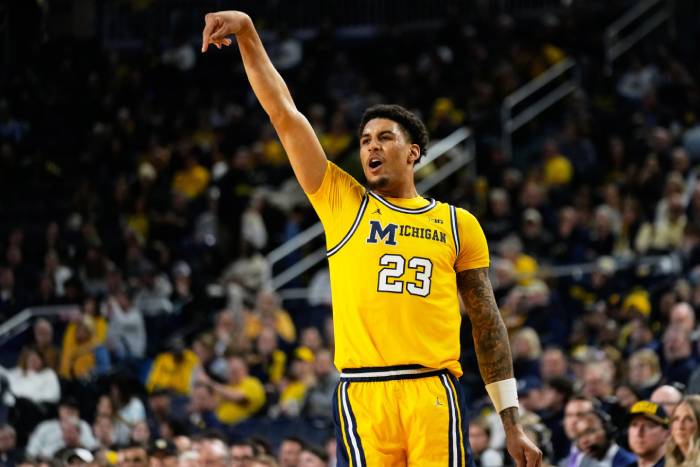
#9 Morez Johnson, F/C, Michigan
#25 Sergio De Larrea, G, Spain
#48 Tobi Lawal, F, Virginia Tech
Many pundits questioned the selection, arguing that Morez Johnson was only the third-best Michigan prospect in the draft behind Yaxel Lendeborg and Aday Mara. Dallas’ evaluation aligned with ours, viewing Johnson as the top NBA prospect of the three. His elite physical tools, defensive potential and long-term ceiling make him well worth the No. 9 selection. Reuniting him with the coach he won an NCAA championship with only strengthens the fit. Dallas landed one of the most physically gifted players in the draft, and his combination of size, length and athleticism gives him a chance to become one of the biggest steals in this class.
Dallas also addressed the backcourt by acquiring Sergio De Larrea, a skilled Spanish guard with excellent feel, passing vision and perimeter shooting ability. His game has shades of a European Alex Caruso, relying on instincts, toughness and basketball IQ more than elite athleticism. He’ll need to add strength, but his all-around game gives him a chance to become a quality NBA rotation player. In the second round, the Mavericks added perhaps their biggest upside swing in Tobi Lawal. A late bloomer to basketball with elite combine testing, Lawal remains raw but possesses rare athletic tools that cannot be taught. Dallas walked away with three players who each address different needs while adding considerable long-term upside.
Denver Nuggets – B+
Added:
#35 Trevon Brazile, PF, Arkansas
#49 Bryce Hopkins, F, St. John’s
Denver traded out of the first round in an effort to manage payroll while still landing excellent value with Trevon Brazile, Few players in this class possess his combination of length, athleticism and defensive versatility. Brazile has the tools to develop behind Aaron Gordon while eventually becoming a rotation player capable of impacting games on both ends.
Bryce Hopkins gives the Nuggets another worthwhile upside gamble. After recovering from a torn ACL, Hopkins regained much of his explosiveness while continuing to showcase his polished face-up game and physical style of play. Improving his consistency from three will determine whether he ultimately earns a long-term NBA role.
Golden State Warriors – A-
Added:
#11 Yaxel Lendeborg, PF, Michigan
#54 Lajae Jones, SF, Florida State
The Warriors made what felt like the only realistic selection available at No. 11 given where the franchise is. With Stephen Curry and Draymond Green still leading a team trying to compete for championships, Golden State needed a player capable of contributing immediately rather than a longer-term project. Yaxel Lendeborg fits that perfectly. Despite entering the league as a 24-year-old rookie, his path to the NBA has been anything but conventional, and his experience, readiness and versatility should allow him to be one of the most productive rookies in the league next season.
Someone like Nate Ament may ultimately have a higher long-term ceiling, but his developmental timeline simply doesn’t match Golden State’s championship window, and he is far from a sure bet to reach that ceiling. Lendeborg gives the Warriors a proven, winning player who can help immediately while still offering room to grow given his relatively late start in organized basketball. The Warriors rounded out their class with Lajae Jones, an explosive developmental wing whose athleticism and improving perimeter game make him an intriguing late-round addition.
Houston Rockets – B-
Added:
#31 Bruce Thornton, PG, Ohio State
Houston aggressively maneuvered to the top of the second round to secure Bruce Thornton, one of the most productive guards in recent Big Ten history. Thornton brings toughness, maturity and scoring ability despite lacking ideal size for the NBA.
The selection came a bit earlier than expected considering some of the remaining talent on the board, but Thornton fits Houston’s identity. He competes, takes care of the basketball and could challenge for backup point guard minutes sooner rather than later.
Los Angeles Clippers – B
Added:
#5 Keaton Wagler, G, Kansas
#36 Baba Miller, F, Cincinnati
#57 Narcisse Ngoy, C, France/Auburn
Keaton Wagler completed one of college basketball’s biggest breakout stories by becoming a Second Team All-American. His offensive efficiency, shot creation and decision making made him worthy of lottery consideration. Still, selecting him at No. 5 is a bit of a gamble. As talented and intriguing as Wagler is, his physical limitations and lack of elite burst leave questions about his ultimate upside and whether he can consistently create separation against NBA athletes.
The Clippers spent the remainder of the draft adding frontcourt depth. Baba Miller remains an intriguing long-term project whose skill level exceeds his physical development and has the versatility to develop into a valuable rotation forward if he becomes more assertive offensively. Narcisse N’Goy offers tremendous size, rebounding and rim protection. It was also a clever selection, as N’Goy (7’7 wingspan) will continue developing at Auburn while the Clippers retain his NBA rights, essentially giving the organization free development before deciding when to bring him over.
Los Angeles Lakers – A-
Added:
#24 Cameron Carr, SG, Tennessee
#56 Vsevolod Ishchenko, G/F, Russia
The Lakers identified Carr]as their preferred target and moved up one spot by acquiring the Knicks’ No. 24 pick to ensure they landed him. Carr possesses elite athleticism, length and scoring upside while continuing to develop defensively. His physical gifts alone give him a chance to contribute much sooner than many players selected in his range.
The Lakers followed that by selecting Vsevolod Ishchenko, one of the better international values in the draft. The VTB Young Player of the Year shot 45 percent from three and brings the type of size and shooting every NBA team covets. Coincidentally, Ishchenko has a little Austin Reaves-style flair to his game with his crafty scoring, feel and shot-making ability, making the Lakers a fitting landing spot. He gives Los Angeles another versatile perimeter player with legitimate long-term upside, capping off one of the stronger two-player classes in the conference.
Memphis Grizzlies – A
Added:
#3 Cameron Boozer, PF/C, Duke
#17 Karim Lopez, SF/PF, New Zealand Breakers
#32 Richie Saunders, SG, BYU
The Grizzlies landed arguably the safest player in the draft with Cameron Boozer. His blend of skill, toughness, feel and competitiveness gives Memphis a legitimate franchise cornerstone to build around as it transitions into its next era. Boozer may never be the most explosive player on the floor, but he consistently impacts winning in virtually every facet of the game.
Memphis doubled down on upside by selecting Karim Lopez, one of the youngest international prospects in the class with an advanced feel for the game and tremendous positional versatility. The Grizzlies closed the draft by selecting Richie Saunders, who slipped due to a torn ACL suffered late in the season. Once healthy, Saunders projects as one of the better shooters in the class and should eventually provide quality depth on the wing.
After the Ja Morant era was derailed by repeated off-court issues, Memphis appears to be placing an even greater emphasis on character and culture, much like Charlotte has done with its recent roster construction. All three additions are widely regarded for their competitiveness, professionalism and team-first approach. Rather than simply chasing talent, the Grizzlies prioritized players who fit the identity they want to build, giving the organization a strong foundation both on and off the court
Minnesota Timberwolves – B+
Added:
#33 Isaiah Evans, SF, Duke
#59 Trey Kaufman-Renn, PF, Purdue
Minnesota moved back from No. 28 to No. 33 in a cost-saving move and still landed one of the biggest steals of the draft in Isaiah Evans. Evans may have slipped partially due to less-than-glowing feedback from Duke during the pre-draft process, allowing Minnesota to capitalize. In reality, falling into the second round could ultimately serve as the wake-up call Evans needed and end up benefiting both the player and the Timberwolves. At 6-foot-6 with deep shooting range and excellent shot mechanics, he possesses legitimate NBA scoring tools. If he adds strength and becomes a more consistent defender, Minnesota could look back on this as one of the defining value picks of the draft.
Late in the second round, the Timberwolves selected Trey Kaufman Renn, a productive, physical forward who consistently impacts games with toughness, rebounding and interior scoring. While he lacks elite athleticism, his instincts and competitiveness give him a chance to outperform his draft position.
New Orleans Pelicans – B
Added:
#58 Jaron Pierre Jr., SG, SMU
Without a selection until late in the second round, the Pelicans still managed to land an intriguing scorer in Jaron Pierre Jr. Pierre blossomed into one of college basketball’s most dangerous perimeter scorers during his final season, combining deep shooting range with good size and athleticism. The biggest challenge will be adjusting from carrying an offense to embracing a complementary role, but the talent is certainly worth a late gamble.
The bigger story for New Orleans, however, remains last year’s decision to trade the pick that ultimately became No. 8 overall. That selection turned into Kingston Flemings after being dealt, along with Isa Newell, in the trade that brought Derik Queen to New Orleans at No. 14 in the 2025 draft. As a result, Flemings and Queen will inevitably be linked throughout their careers, and the trade will continue to be scrutinized whenever either player makes a significant leap.
Oklahoma City Thunder – B-
Added:
#12 Aday Mara, C, Michigan
#16 Bennett Stirtz, PG, Iowa
#41 Otega Oweh, SG, Kentucky
Oklahoma City once again came away with a solid draft class, although this group feels more geared toward complementing an already championship-caliber roster than adding another future star. Selecting Aday Mara at No. 12 felt like a reach. While Mara unquestionably brings great size and potential rim protection, the pick appears heavily influenced by the need to match up with Victor Wembanyama and other supersized frontcourts in the Western Conference. Mara has intriguing tools, but his offensive limitations and lack of mobility still leave significant questions.
The Thunder rebounded nicely by selecting Bennett Stirtz at No. 16. Stirtz was one of the most productive guards in college basketball and fits Oklahoma City’s mold of intelligent, competitive, efficient players. His feel for the game, decision-making and toughness give him a real chance to become yet another Thunder draft success, and he could ultimately prove to be the best value of their class.
Oklahoma City also selected Ryan Conwell at No. 37 before dealing him to Miami, then acquired Otega Oweh later in the evening. Oweh adds athleticism, defensive toughness and downhill driving ability, though he projects more as a complementary rotation piece than a difference-maker. As always, the Thunder drafted players who fit their culture, but with such a deep roster, finding meaningful opportunities for another wave of young contributors may prove just as challenging as evaluating the picks themselves.
Phoenix Suns – B
Added:
#30 Koa Peat, PF, Arizona
Peat slid farther than many expected after electing to remain in the draft, but Phoenix represents an ideal landing spot. The Suns have shown they can successfully develop athletic forwards whose perimeter shooting remains a work in progress, and Peat’s strength, motor and versatility fit that mold. As a local Arizona product, he’ll also arrive with built-in fan support.
Peat was viewed by many draft pundits as a potential top-10 selection early in the season, though we consistently had him graded significantly lower. In the end, the concerns we highlighted proved difficult for teams to overlook. His lack of perimeter shooting and somewhat awkward positional fit ultimately pushed him to the back of the first round, reinforcing our view that he was more of a borderline first-round talent, even in a draft where the latter part of the first round was thinned by strong NIL retention.
From a draft-stock perspective, declaring this year was a significant gamble. There was a compelling case for returning to Arizona, where he could have continued developing while earning substantial NIL income. Instead, he held onto first-round status, putting him on the NBA development timeline sooner. If Phoenix can help him make meaningful strides as a shooter and offensive player, he’ll have the opportunity to earn a lucrative second contract much earlier than if he had stayed in college.(IF).
Sacramento Kings – B+
Added:
#7 Darius Acuff, PG, Arkansas
#29 Alex Karaban, SF, Connecticut
#45 Emanuel Sharp, SG, Houston
Sacramento landed its reported top target in Darius Acuff, one of the most gifted offensive guards in the draft. Considered by many to be a top-five talent, Acuff slipping to No. 7 could ultimately prove to be one of the steals of the draft. He has also embraced the opportunity to play in Sacramento, making the fit an encouraging one for both player and organization. His creativity, scoring instincts and playmaking ability are elite, although improving defensively will be essential as he develops into the potential face of the franchise. For a team badly in need of a talent infusion and a younger core to build around, Acuff provides exactly that.
The Kings followed by adding a pair of pure shooters in Alex Karaban and Emanuel Sharp. Karaban arrives as a two-time national champion with elite shooting ability and outstanding basketball IQ, while Sharp brings toughness, perimeter shooting and winning habits after four successful seasons under Kelvin Sampson. Sacramento did a nice job surrounding its potential franchise guard with complementary floor spacers, giving the class a balanced mix of upside, shooting and experience.
San Antonio Spurs – B
Added:
#20 Jayden Quaintance, C, Kentucky
#26 Tarris Reed Jr., C, Connecticut
#44 Maliq Brown, F/C, Duke
The Spurs continued building around Victor Wembanyama by adding size, toughness and defensive versatility. Jayden Quaintance remains one of the biggest upside bets in the draft. Still just 18 years old, he possesses elite defensive tools and tremendous long-term potential despite coming off an ACL injury. With a possible redshirt season ahead, he represents the type of long-term swing worth taking for a patient organization.
On the surface, using all three selections on frontcourt players is a slight head-scratcher considering Wembanyama is the franchise centerpiece. Tarris Reed Jr. developed into one of college basketball’s most dependable interior bigs, bringing rebounding, passing and physical play to the frontcourt. He should add toughness and reliable depth behind Wembanyama. Maliq Brown gives San Antonio another switchable defender with excellent instincts and a team-first mentality, projecting as more of a specialty defensive role player than an offensive contributor. None of the three are polished offensive players, but each fits the defensive identity the Spurs continue to build.
Utah Jazz – B+
Added:
#2 Darryn Peterson, G, Kansas
Few players in the draft possess more raw offensive talent than Darryn Peterson. At his best, he looked every bit the equal of A.J. Dybantsa and flashed legitimate franchise-player potential. His ability to create shots, score at all three levels and make difficult plays look routine is special. With his size, shot-making ability and advanced offensive repertoire, Peterson has all the tools to develop into the centerpiece of Utah’s rebuild.
Peterson’s pre-draft process was somewhat unusual, as he did not work out for the Jazz. Instead, Utah’s front office traveled to meet with him, and those conversations appeared to put any concerns to rest. After the draft, Peterson expressed genuine enthusiasm about joining the organization and embraced the opportunity to help lead the franchise into its next era.
The biggest question moving forward will be overcoming any health concerns and staying on the floor consistently. Beyond that, Peterson’s freshman season featured stretches of brilliance mixed with occasional questions about maturity and consistency. If Utah can provide the right structure and Peterson remains healthy, the upside is massive. In that scenario, the Jazz may look back on this as the selection that landed them one of the NBA’s next elite offensive stars.


