
The small forward position in the 2026 NBA Draft is led by a pair of elite freshman talents at the top, but the depth of the group extends well into the second round with a mix of international prospects, athletic two-way wings, accomplished college veterans, and versatile forwards. While AJ Dybantsa sits alone in the top tier as the projected No. 1 overall pick, several other wings offer intriguing combinations of size, shooting, athleticism, and versatility that should translate well to the modern NBA.
1. AJ Dybantsa 6’9”, 215 SF/PF BYU, Fr.
Stats: 35 GP, 25.5 PPG, 51.0 FG%, 33.1 3PT%, 77.4 FT%, 6.8 RPG, 3.7 APG, 1.1 SPG, 0.3 BPG, 3.1 TO
Dybantsa stands atop this class as the clear-cut top small forward prospect and the favorite to be selected first overall. A dynamic three-level scorer with elite physical tools, he combines size, athleticism, shot creation, and playmaking ability in a package rarely seen from a freshman wing. He carried BYU offensively while maintaining strong efficiency and impacting games in every statistical category. His ability to function as a point forward, create his own offense, facilitate for teammates, and defend multiple positions gives him franchise-player upside. The perimeter shot remains the final piece of his offensive evolution, but his steady improvement throughout the season only reinforced his standing as the premier prospect in the draft.
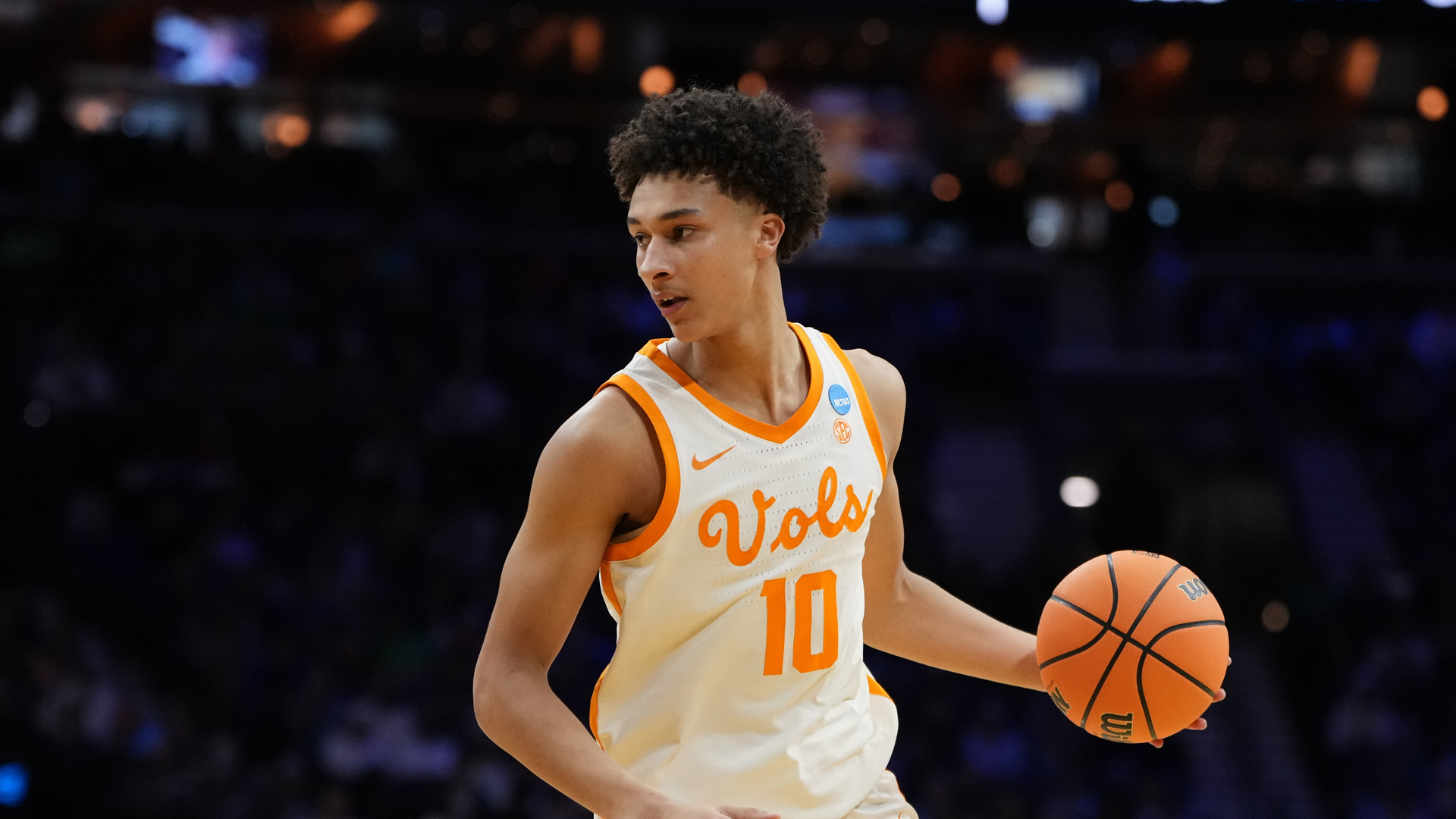
2. Nate Ament 6’11”, 205 SF/PF Tennessee, Fr.
Stats: 35 GP, 16.7 PPG, 39.9 FG%, 33.3 3PT%, 79.0 FT%, 6.3 RPG, 2.3 APG, 1.0 SPG, 0.6 BPG, 2.3 TO
Ament offers one of the most intriguing upside plays in the entire draft. Standing nearly seven feet tall while possessing perimeter skills, fluid mobility, and impressive ball handling ability, he fits the prototype of the modern NBA jumbo wing. His production steadily improved throughout the season as he became more comfortable physically and mentally. While he still needs to add considerable strength and consistency, his combination of size, skill, defensive versatility, and long-term offensive upside gives him one of the highest ceilings among non-guards in the class. Few players outside the top five possess comparable star potential.
3. Karim Lopez 6’8”, 205 SF New Zealand Breakers (NBL), 2007
Stats: 31 GP, 11.9 PPG, 50.2 FG%, 32.6 3PT%, 71.7 FT%, 6.1 RPG, 2.0 APG, 1.2 SPG, 1.0 BPG, 3.0 TO
Lopez remains one of the premier international prospects available after a productive season with the New Zealand Breakers. The Mexican wing possesses ideal NBA size, a smooth shooting stroke, and intriguing two-way versatility. He consistently contributed across the board while competing against seasoned professionals in the NBL, showing encouraging flashes as both a scorer and defender. While consistency and physicality remain areas for development, Lopez possesses the type of modern wing profile teams covet. His youth, shooting potential, and overall skill level give him substantial long-term upside.
4. Dailyn Swain 6’7”, 220 SF Texas, Jr.
Stats: 36 GP, 17.3 PPG, 54.2 FG%, 34.4 3PT%, 81.5 FT%, 7.5 RPG, 3.6 APG
Swain enjoyed a breakout season and established himself as one of the most athletic wings in the class. A powerful slasher with an NBA-ready frame, he thrives attacking downhill and finishing through contact. His improved handle and playmaking ability allowed him to expand his offensive role considerably, while his rebounding and defensive tools remain major strengths. The jumper still needs continued refinement, but his strong free throw percentage suggests there is room for further shooting development. Swain’s blend of athleticism, versatility, and production makes him one of the more intriguing wing prospects outside the lottery.
5. Joshua Jefferson 6’9”, 240 SF Iowa State, Sr.
Stats: 35 GP, 30.9 MPG, 16.4 PPG, 7.4 RPG, 4.8 APG, 1.6 SPG, 0.8 BPG, 47.1 FG%, 34.5 3PT%, 70.0 FT%
Jefferson brings one of the most complete and unique games among forward prospects. Functioning as a point forward for much of the season, he consistently filled the stat sheet while serving as both a scorer and facilitator. His ability to rebound, defend, pass, and make winning plays gives him a strong NBA foundation. While he lacks elite athleticism, his toughness, IQ, feel for the game, and versatility should allow him to contribute in a variety of roles. He projects as one of the safer senior prospects available and could outperform his draft position due to his well-rounded skill set.
6. Alex Karaban 6’8”, 225 SF UConn, Sr.
Stats: 40 GP, 34.3 MPG, 46.4 FG%, 37.4 3PT%, 85.1 FT%, 13.3 PPG, 5.3 RPG, 2.4 APG, 0.8 SPG, 0.8 BPG, 1.1 TO
Karaban remains one of the most polished and NBA-ready wings in the draft. A proven winner and multi-year contributor at UConn, he combines shooting, size, intelligence, and versatility into a highly translatable package. He understands spacing, makes quick decisions, and consistently plays within the flow of the offense. His athletic limitations may cap his upside compared to younger prospects, but his combination of shooting ability, feel for the game, and positional versatility should make him an attractive option for playoff-caliber teams seeking immediate contributors.
7. Tyler Nickel 6’7”, 215 SF Vanderbilt, Sr.
Stats: 34 GP, 17.7 PPG, 45.1 FG%, 39.8 3PT%, 82.5 FT%, 5.9 RPG, 1.8 APG
Nickel enters the draft as one of the premier shooting specialists available. A confident floor spacer with deep range and excellent size for a wing, he consistently punished defenses throughout his collegiate career. His shooting translates cleanly to the NBA level, and he has shown enough improvement attacking closeouts and moving without the ball to avoid being viewed strictly as a one-dimensional specialist. While his defensive limitations and average athleticism may cap his upside, elite shooting remains one of the most valuable skills in basketball, giving Nickel a clear pathway toward an NBA role.
8. Dillon Mitchell 6’8”, 200 SF St. John’s, Jr.
Stats: 37 GP, 28.1 MPG, 55.9 FG%, 6.7 3PT%, 49.4 FT%, 8.0 PPG, 7.0 RPG, 3.0 APG, 1.3 SPG, 0.7 BPG, 1.0 TO
Mitchell is one of the most explosive athletes in the draft and arguably the best pure defensive wing prospect outside the lottery. His length, speed, leaping ability, and versatility allow him to impact games without needing offensive touches. He rebounds at a high level, finishes above the rim, generates transition opportunities, and routinely makes hustle plays that help teams win. The offensive limitations are significant, however. His perimeter shooting remains virtually nonexistent and his free throw percentage raises concerns about future development as a shooter. Even so, NBA teams consistently find room for elite athletes who defend, rebound, and play with relentless energy.
9. Nick Martinelli 6’8”, 225 SF Northwestern, Sr.
Stats: 33 GP, 35.6 MPG, 51.0 FG%, 41.7 3PT%, 80.9 FT%, 23.0 PPG, 6.2 RPG, 2.0 APG, 0.8 SPG, 0.4 BPG, 1.4 TO
Martinelli was one of the most productive scorers in college basketball this season and quietly put together one of the strongest offensive campaigns in the country. A skilled left-handed wing with a strong frame and outstanding feel for the game, he consistently generated efficient offense from all three levels. He combines footwork, touch, strength, and basketball IQ to create scoring opportunities without relying on elite athleticism. His 41.7% three-point shooting further strengthened his profile and demonstrated legitimate floor-spacing ability. While his physical tools may not jump off the page, his production, maturity, competitiveness, and skill level make him one of the more intriguing upperclassmen wings available.
10. Mark Mitchell 6’9”, 230 SF/PF Missouri, Sr.
Stats: 33 GP, 33.8 MPG, 54.7 FG%, 38.8 3PT%, 66.9 FT%, 18.0 PPG, 5.2 RPG, 3.6 APG, 0.7 SPG, 0.5 BPG, 2.1 TO
Mitchell quietly put together one of the better senior seasons in the country, significantly expanding his offensive game while continuing to rely on the strength, toughness, and versatility that have always defined his profile. His improvement as a shooter was particularly notable, connecting on 38.8% from three after entering college with major questions about his perimeter game. He combines a powerful frame with solid athleticism and has become a much more capable secondary creator, averaging 3.6 assists per game while consistently making smart decisions. While he may not possess elite upside, Mitchell’s blend of physicality, maturity, versatility, and improved shooting gives him a strong chance to carve out a long NBA career as a reliable rotation forward.
- Darrion Williams – NC State
- Mohammad Amini – SLUC Nancy
- Bryce Hopkins – St. John’s
- Michael Ajayi – Butler
- Kobe Knox – South Carolina
- AJ Storr – Mississippi


