
With the 2026 NBA Draft now just a few days away and workouts entering their final stages, it’s a good time to continue our positional breakdowns with a look at the shooting guard position. This year’s group features an intriguing mix of elite shot-makers, explosive athletes, polished upperclassmen, and versatile combo guards capable of filling multiple roles. While point guard may ultimately prove to be the deepest position in the class, shooting guard offers plenty of lottery talent and several prospects with a chance to significantly outperform their draft position. Shot creation, perimeter shooting, and positional versatility define this year’s group.
1. Darryn Peterson 6’5”, 200 SG/PG Kansas, Fr.
Stats: 24 GP, 20.2 PPG, 4.2 RPG, 1.6 APG, 1.4 SPG, 0.6 BPG, 43.8 FG%, 38.2 3PT%, 82.6 FT%
Peterson remains the premier shooting guard prospect in the class due to his rare blend of size, burst, strength, and elite shot-making ability. A dynamic scorer capable of generating offense at all three levels, he consistently pressures defenses with his first step, pull-up shooting, and ability to create difficult shots both on and off the ball. His 8’7” standing reach gives him uncommon physical tools for a guard, adding considerable defensive upside and positional versatility. Peterson largely views himself as a point guard, and there is optimism about him spending stretches on the ball and operating as a secondary playmaker at the next level. He possesses legitimate combo guard traits, but projects more naturally as a shooting guard due to his scoring instincts, shot-making mentality, and ideal fit alongside another primary initiator. Though his season was somewhat uneven and impacted by cramping issues that disrupted rhythm and availability, the flashes remained extremely high level. His shooting efficiency, scoring instincts, and ability to take over stretches offensively give him arguably the highest ceiling among guards in the class if healthy.
2. Keaton Wagler 6’6”, 185 SG/PG Illinois, Fr.
Stats: 37 GP, 17.9 PPG, 5.1 RPG, 4.2 APG, 0.9 SPG, 0.4 BPG, 44.5 FG%, 39.7 3PT%, 79.6 FT%
Wagler emerged as one of the biggest surprises in college basketball, rising from a lightly regarded recruit into one of the country’s most productive freshman guards while helping lead Illinois to a Final Four run. A poised offensive player with tremendous feel, he combines high-level shot-making with strong decision-making and mature pace. His 46-point performance against Purdue showcased his deep range and ability to completely take over games offensively. Despite a thin frame and some concerns surrounding his wingspan measurement, his blend of shooting, feel, confidence, and offensive versatility give him clear lottery appeal. In many draft classes, he would have a legitimate argument to be discussed among the very top guards available. Wagler also appears to be generating legitimate top-five momentum late in the process and has been strongly tied to the Clippers in several circles, with a real chance to hear his name called as early as No. 5 on Tuesday.
3. Cameron Carr 6’5”, 190 SG/SF Tennessee, Jr.
Stats: 34 GP, 18.9 PPG, 5.8 RPG, 2.6 APG, 0.9 SPG, 1.3 BPG, 49.4 FG%, 37.4 3PT%, 80.1 FT%
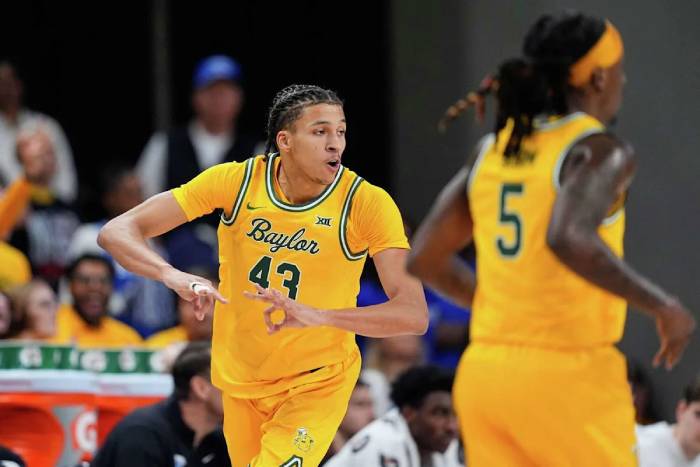
Carr (pictured) put together one of the stronger breakout seasons among returning wings, emerging as a major offensive option after two relatively quiet years at Tennessee. A long, explosive athlete, he consistently attacked the rim, finished above the basket, and rediscovered the perimeter shooting ability that made him highly regarded out of high school. His athleticism, improving shot creation, and ability to score efficiently both on and off the ball make him one of the more intriguing wing prospects in the class. While continuing to add strength and tightening decision-making will be important, Carr’s combination of athletic tools, shooting upside, and defensive potential gives him a strong chance to outperform his eventual draft position.
4. Meleek Thomas 6’5”, 185 SG/PG Arkansas, Fr.
Stats: 37 GP, 15.6 PPG, 3.8 RPG, 2.5 APG, 1.5 SPG, 0.2 BPG, 43.5 FG%, 41.6 3PT%, 84.3 FT%
Thomas established himself as one of the more natural scorers in the freshman class thanks to his unique herky-jerky style, pace, and shot-making instincts. A difficult player to stay in front of, he uses hesitation moves, long strides, and strong body control to create separation while consistently making tough shots. His perimeter shooting stood out as a major strength, knocking down over 41% from three while also showing excellent touch from the free throw line. Though more of a combo guard than a true lead, his scoring instincts, low turnover rate, and continued physical development give him strong appeal as a long-term offensive weapon.
5. Isaiah Evans 6’6”, 180 SG/SF Duke, So.
Stats: 38 GP, 15.0 PPG, 3.2 RPG, 1.3 APG, 0.7 SPG, 0.7 BPG, 43.3 FG%, 36.1 3PT%, 86.0 FT%
Evans made a strong sophomore jump, emerging as one of Duke’s primary perimeter scoring threats while showing increased confidence and offensive polish. A smooth, natural shot-maker with length and a high release point, he expanded his offensive game beyond spot-up shooting and showed flashes of pull-up scoring and secondary creation. His perimeter shooting profile remains highly appealing, backed by excellent free throw numbers and difficult shot-making ability. Adding strength remains the biggest swing factor in his development, as continued physical growth should help unlock greater defensive impact, rebounding, and overall offensive consistency. His combination of size and shot-making gives him considerable long-term upside.
6. Richie Saunders 6’6”, 205 SG BYU, Sr.
Stats: 25 GP, 31.4 MPG, 48.9 FG%, 37.6 3PT%, 81.7 FT%, 18.0 PPG, 5.8 RPG, 2.1 APG, 1.7 SPG, 0.3 BPG, 1.6 TO
Saunders quietly posted one of the more productive and dependable senior shooting guard prospects in the class following a breakout season at BYU. A mature, polished wing with good positional size, he plays with toughness and consistently makes smart decisions within the flow of the offense. Saunders spaces the floor effectively, moves well without the ball, and understands how to capitalize on openings without forcing action. He also rebounds his position and competes defensively, evidenced by his strong steal numbers, giving him value as a complementary two-way wing. After averaging 18.0 points while shooting 48.9% from the field, 37.6% from three, and 81.7% from the line, he increasingly looks like one of the safer upperclassmen wings in the class. As a 24-year-old coming off a knee injury, there may be some adjustment time early, but the skill level, shooting ability, feel for the game, and physical tools give him a realistic pathway to carve out an NBA role.
7. Jaron Pierre 6’6”, 200 SG SMU, Sr.
Stats: 34 GP, 33.2 MPG, 46.2 FG%, 37.0 3PT%, 75.8 FT%, 17.6 PPG, 4.9 RPG, 2.1 APG, 1.0 SPG, 0.4 BPG, 1.9 TO
Pierre emerged as one of the more productive senior shooting guard prospects in the class after a strong season at SMU. A smooth scoring wing with good positional size, he offers intriguing offensive versatility and the ability to generate offense both on and off the ball. Pierre averaged 17.6 points while shooting a solid 37.0% from three, showing legitimate perimeter scoring ability along with enough size to shoot over smaller defenders and add lineup flexibility. He rebounds his position reasonably well, competes defensively, and plays with confidence offensively, capable of creating his own shot in stretches. While consistency, shot selection, and overall efficiency will remain key points of evaluation against NBA-level athletes, his blend of size, scoring ability, and perimeter shooting give him a realistic chance to emerge as a productive rotation wing and potentially outperform expectations.
8. Ryan Conwell 6’3”, 215 SG Louisville, Sr.
Stats: 34 GP, 30.9 MPG, 40.8 FG%, 34.5 3PT%, 83.2 FT%, 18.0 PPG, 4.8 RPG, 2.7 APG, 1.1 SPG, 0.2 BPG, 2.1 TO
Conwell profiles as one of the stronger veteran shooting guard options in the class after a productive senior season at Louisville. A compact, physical guard with good strength, he averaged 18.0 points while bringing scoring punch, maturity, and shot-making ability to the perimeter. Though somewhat undersized for a traditional shooting guard, Conwell compensates with toughness, physicality, and an aggressive offensive approach. His perimeter shooting remains a clear selling point, connecting on 34.5% from three while knocking down over 83% from the free throw line. He also contributes as a secondary playmaker and rebounder, giving him value beyond scoring. While he may not possess elite athletic tools or long-term upside, his experience, competitiveness, and ability to create offense give him a realistic chance to carve out a supporting NBA role.
9. Donovan Atwell 6’5”, 200 SG Texas Tech, Sr.
Stats: 34 GP, 34.6 MPG, 46.3 FG%, 45.8 3PT%, 84.1 FT%, 13.5 PPG, 3.2 RPG, 0.8 APG, 1.2 SPG, 0.1 BPG, 0.4 TO
Atwell quietly emerged as one of the more intriguing senior shooting guard prospects in the class thanks to his elite perimeter shooting, maturity, and complementary offensive value. A confident floor spacer with good size for the position, he averaged 13.5 points while connecting on an outstanding 45.8% from three and 84.1% from the free throw line, giving him one of the strongest pure shooting profiles among senior wings. He plays within structure, moves well without the ball, and understands how to capitalize on defensive breakdowns without forcing action, reflected in his remarkably low turnover rate. Though he may not possess elite athletic upside or self-creation ability, Atwell’s combination of size, high-level shooting, efficiency, and low-maintenance offensive game gives him a very real chance to carve out a role as a floor-spacing rotation wing at the next level.
10. Otega Oweh 6’5”, 215 SG Kentucky, Sr.
Stats: 36 GP, 32.8 MPG, 46.5 FG%, 33.3 3PT%, 73.1 FT%, 18.0 PPG, 4.8 RPG, 2.7 APG, 1.8 SPG, 0.3 BPG, 2.1 TO
Oweh brings strong physical tools, athleticism, and defensive upside to the shooting guard group after a productive senior season at Kentucky. A powerful downhill athlete, he consistently pressures defenses with his strength, explosiveness, and willingness to attack the rim, averaging 18.0 points while contributing across the board. His toughness and defensive activity stand out, evidenced by his strong steal numbers and ability to impact games with energy on both ends. Oweh also showed growth as a secondary playmaker, averaging 2.7 assists while embracing a larger offensive role. His perimeter shooting remains the major swing skill, connecting on 33.3% from three, but the overall scoring production, physical profile, and defensive tools give him appeal as a rugged two-way wing capable of carving out a rotation role if the jumper continues to improve.
Honorable Mention:
Emanuel Sharp 6’4”, 210 SG/SF Houston, So.
AJ Storr 6’7”, 205 SG Mississippi, Sr.
Kobe Knox 6’5”, 200 SG South Carolina, Sr.
Riley Kugel 6’5”, 205 SG Mississippi State, Sr.
Roddy Gayle 6’5”, 205 SG Michigan, Sr.
Rylan Griffen 6’6”, 190 SG Kansas, Sr.
Lamar Wilkerson 6’3”, 200 SG Indiana, Sr.


